Why No One Builds Ships Anymore
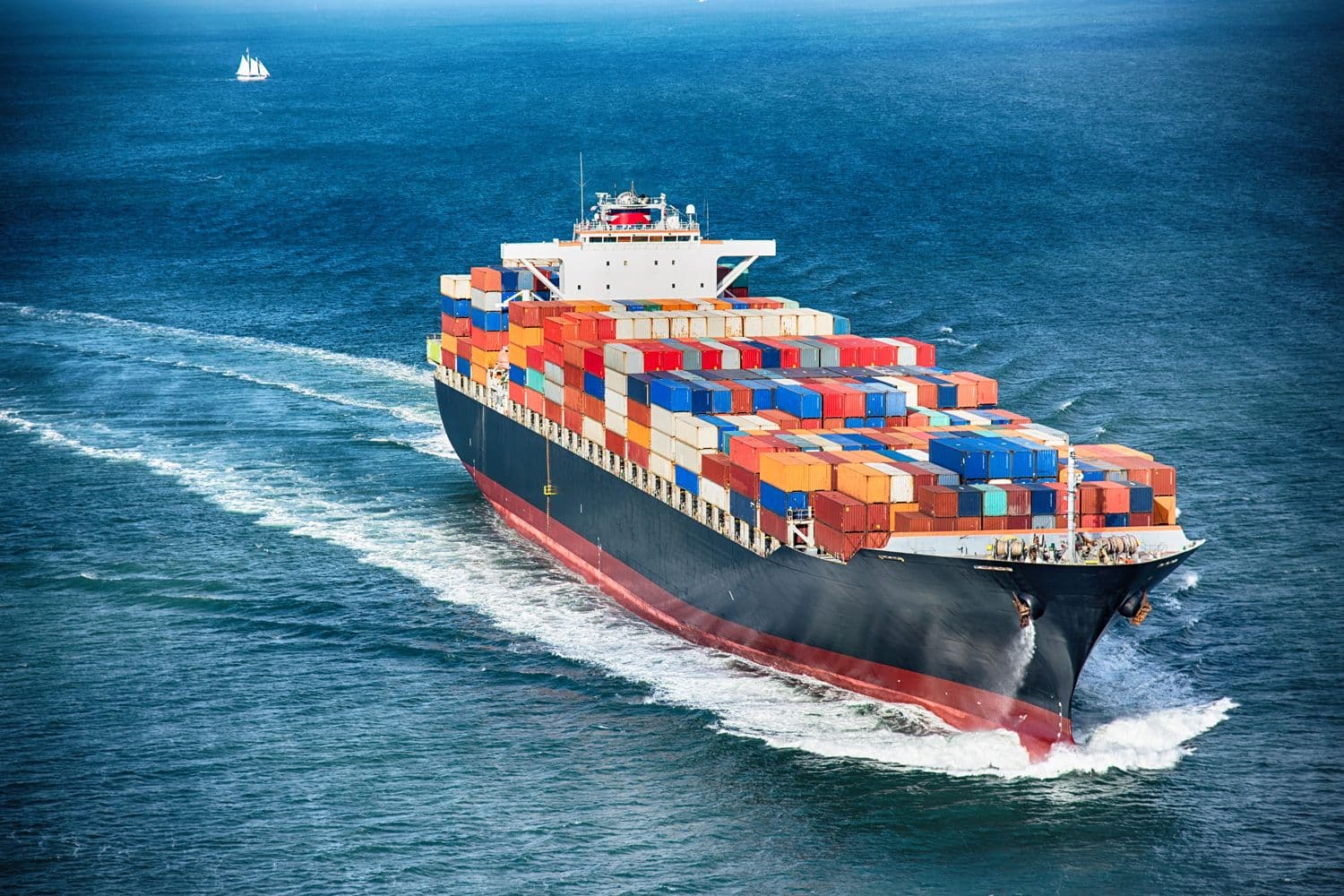
Commercial maritime transport is the silent engine of globalization, the unseen force that moves the modern world. An international merchant fleet serves as the planet's circulatory system, with between 80% and 90% of all globally traded goods by volume transported through sea routes. In 2024, this network carried the bulk of a global trade market valued at $33 trillion. Annually, an estimated 12 billion tonnes of freight are moved by sea, making maritime transport the undisputed cornerstone of global trade.
Driven by powerful economic imperatives and deliberate statecraft, this shift has concentrated the capacity to build the world's great commercial vessels in a handful of East Asian nations. This concentration is a defining feature of the contemporary global economy, with profound and escalating economic and geopolitical consequences. This analysis will explore the industry's evolution, its indispensable role, the anatomy of its consolidation, and the far-reaching impacts of this new global reality.

A Brief History of Commercial Shipping
The history of the commercial ship is a narrative of innovation driven by the economic pressure to move more goods, more quickly, and more cheaply. The journey began millennia ago, with ancient Egyptians building reed boats for trade along the Nile and Phoenicians engineering high-capacity cedar ships to dominate Mediterranean commerce. For centuries, vessel design evolved incrementally, from Viking longboats and Chinese junks to the multi-masted sailing ships that enabled the Age of Discovery.
The Industrial Revolution marked a turning point. The convergence of the iron hull and the screw propeller in the mid-1800s rendered millennia of wooden shipbuilding obsolete, giving rise to the first modern steam-powered bulk carriers and oil tankers. However, the most transformative leap came in the 20th century with the "container revolution." Conceived by trucking magnate Malcom McLean, the standardized intermodal container solved the crippling inefficiency of loading and unloading cargo piece by piece. The first container voyage in 1956 heralded a new era, and with the adoption of ISO standards in 1968, containerization exploded, eventually carrying 90% of the world's non-bulk cargo. This innovation unleashed a relentless "race for scale," as larger ships offered lower costs per container. This drive has produced the leviathans of today—Ultra-Large Container Vessels (ULCVs) capable of carrying over 24,000 containers, the current apex of a quest for efficiency that began with a simple raft.

The Unseen Engine of Global Trade
Maritime shipping remains the irreplaceable foundation of the global economy due to an unparalleled combination of cost-effectiveness, energy efficiency, and sheer capacity. Sea freight is typically four to six times cheaper than air freight and vastly more fuel-efficient per ton-kilometer, making it the only viable option for the vast majority of international trade. The carrying capacity of a single ULCV is equivalent to that of 16 or 17 World War II-era freighters.
This extraordinary efficiency has enabled the complex, continent-spanning "just-in-time" supply chains that define modern manufacturing, where components are delivered to factories mere hours before they are needed. However, this optimization has also created profound fragility. The global shipping network relies on a few major trade arteries passing through critical maritime chokepoints like the Suez and Panama Canals. The 2021 blockage of the Suez Canal by the Ever Given halted an estimated $9.6 billion of trade per day, while recent droughts in Panama and attacks in the Red Sea have forced costly and time-consuming detours, revealing how a single point of failure can send shockwaves through the entire global economy.
The Great Shift East and the Consolidation of Shipbuilding
The geography of global shipbuilding has been radically redrawn over the past 70 years. An industry once dominated by the shipyards of Europe and North America is now one of the most geographically concentrated heavy industries in the world. This great shift to the East was the direct result of decades of deliberate, state-directed industrial policy. Today, the commercial shipbuilding industry is a triumvirate, with over 95% of the market controlled by just three nations: China, South Korea, and Japan.
As Western shipbuilding capacity declined due to shifting economic priorities and a failure to modernize, a new center of gravity emerged in East Asia, first in Japan, then South Korea, and most dramatically, in China. China's ascent was fueled by its 2006 designation of shipbuilding as a "strategic industry," unleashing a torrent of state-led investment, subsidies, and financing that leveraged its low labor costs and dominance in steel production. By 2010, China had overtaken South Korea to become the undisputed global leader by volume.
The supremacy of this "Big Three" is built on a powerful combination of statecraft, economic advantages, and distinct national strategies. Unlike in the West, governments in all three nations have treated shipbuilding as a strategic asset, providing extensive support through subsidies, preferential financing, and R&D funding. This has created a dynamic of "value vs. volume," where China leverages its scale to dominate standard vessel construction, South Korea focuses on high-margin, technologically complex ships like LNG carriers, and Japan carves out a niche in high-quality, specialized vessels.

Tides of Power - Economic and Geopolitical Impacts
The concentration of shipbuilding in East Asia has profound consequences, serving as a powerful economic engine for the leading nations while reshaping the global geopolitical landscape. For China, South Korea, and Japan, the industry is a foundational pillar of their economies, supporting hundreds of thousands of jobs and driving a network of related industries like steel and heavy machinery.
The most significant geopolitical impact is China's ability to leverage its commercial shipbuilding dominance for military advantage through its Military-Civil Fusion (MCF) strategy. This state-directed policy eliminates the barriers between China's commercial and defense industrial bases. The same state-owned conglomerates, shipyards, and technology that build the world's commercial fleet also build the warships for the People's Liberation Army Navy (PLAN). Consequently, the billions of dollars in revenue from foreign commercial contracts flow directly to the state-owned enterprises responsible for naval modernization, effectively meaning that global trade is helping to underwrite the expansion of the PLAN.
This dynamic has created a critical strategic vulnerability for Western nations. The hollowing out of their own commercial shipbuilding capacity has left them dependent on their primary geopolitical competitor for the very vessels that sustain their economies, eroding their industrial resilience and ability to support military operations in a crisis. In response, the United States and its allies are beginning to pursue a "friendshoring" strategy, deepening industrial collaboration with South Korea and Japan to create a resilient, alternative supply chain for shipbuilding and counterbalance China's dominance. This is transforming commercial shipyards into arenas of great power competition.
The Next Wave of Innovation
The shipbuilding industry is on the cusp of another transformative era, driven by the twin forces of environmental mandates and technological breakthroughs. The global push for decarbonization is igniting a race to develop cleaner vessels powered by alternative fuels like Liquefied Natural Gas (LNG), methanol, ammonia, and hydrogen. This green transition is a key competitive battleground, with South Korea and Japan aiming to leverage their high-tech expertise while China invests heavily to maintain its lead.
Simultaneously, the industry is moving steadily towards automation to address crew shortages and improve efficiency. The future is not one of unmanned "ghost ships" but of "hybrid intelligence," where human crews are augmented by powerful AI systems for functions like collision avoidance and route optimization. Japan has emerged as a leader in this field with its ambitious MEGURI 2040 project, which aims to commercialize fully autonomous ships by 2025. The nations that master these green and smart technologies will set the standards for global trade for decades to come.
The commercial shipbuilding industry, born from a timeless need for trade, has been reshaped by a modern industrial revolution. The strategic consolidation of shipbuilding in East Asia—driven by deliberate state policy—has created an industrial powerhouse that is both the bedrock of the global economy and a critical arena of geopolitical competition. The dominance of China, South Korea, and Japan has delivered unparalleled economic benefits to those nations but has also created strategic dependencies and fused commercial enterprise with military ambition. As the industry navigates the next great challenges of decarbonization and automation, the central tension remains: the world depends on an industry that is now inextricably linked to the global balance of power. The future of global trade will be built in the shipyards that can best resolve the competing demands of economic efficiency, geopolitical security, and environmental sustainability.


