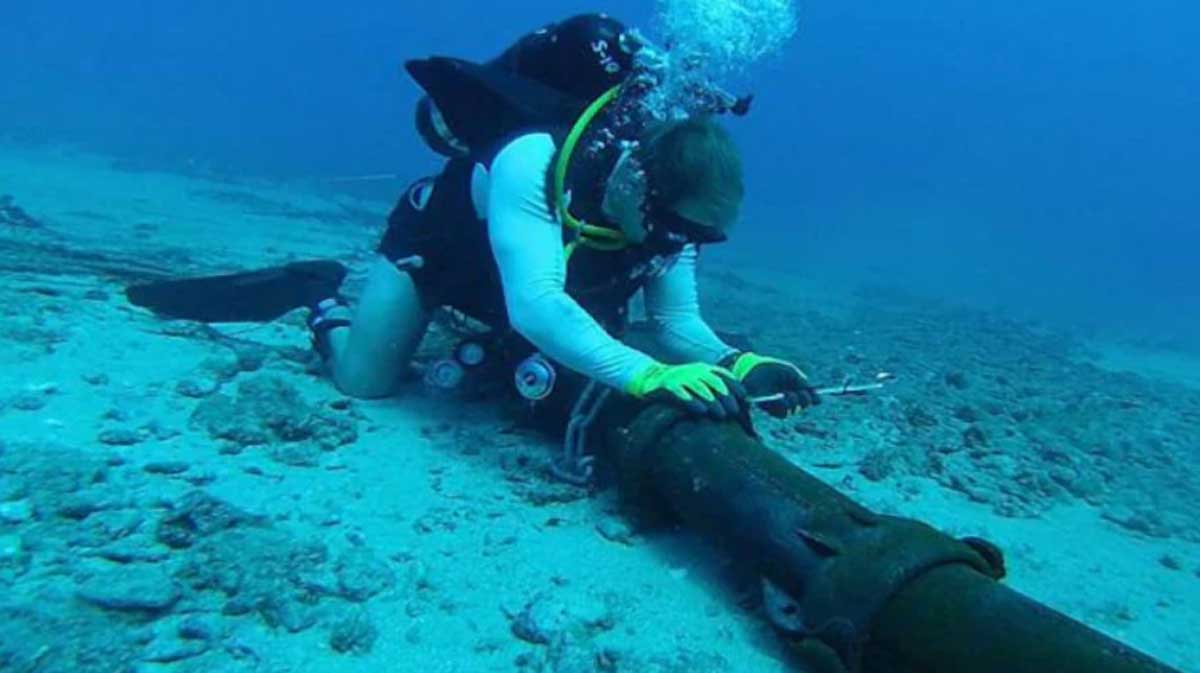
The Invisible Infrastructure That Runs the Internet

In a world that is obsessed with the cloud, the real power may actually lie on the ocean floor. While we often think of the internet as wireless, over 95% of international data traffic flows through subsea fibre optic cables. These cables connect continents, allowing everything from MrBeast videos to stock trades between London and New York to travel in milliseconds, yet few people have heard of the companies that build and maintain them.
One such company is SubCom, a major player in this highly specialized and under the radar industry. In a nutshell the global subsea cable industry is dominated by just four firms: Alcatel Submarine Networks (ASN), owned by the French government; NEC Corporation, a Japanese multinational; SubCom (formerly Tyco, based in the US); and HMN Tech, a Huawei subsidiary in China. Together, these firms control over 70% of the world's subsea cable infrastructure. A few mid-sized players firms exist, but they primarily work on small-scale or regional projects.
The barriers to entry in this market are extremely high. Laying cables across oceans requires enormous capital, complex marine logistics, and decades of technical know-how. As a result, very few new players have emerged, and M&A activity has remained limited. Most growth has come organically through R&D and increased bandwidth demand. Notable deals include Nokia’s sale of a majority stake in ASN to the French government and its acquisition of Infinera to boost optical networking capabilities.
SubCom itself has a fascinating backstory. It was born out of a Cold War-era spy project, and since then the company has grown into one of the world’s leading providers of undersea cable systems. Today, it supports the United States’ efforts to maintain an edge over China in digital infrastructure. SubCom designs, manufactures, deploys, and maintains fibre optic networks that power the global internet. The company has deployed over 200 cable systems which is enough to circle the Earth 25 times at the equator.
It was previously known as Tyco Electronics Subsea Communications and operates two subsidiaries: Global Mariner LLP, which provides submarine cable maintenance services (acquired from BCE Inc. in 2003 for $8 million), and Transoceanic Cable Ship Co., which supplies cable ships and related equipment. In 2018, SubCom was acquired by Cerberus Capital Management, a global private equity firm that specialises in alternative investing.
SubCom supports a wide range of clients from tech giants to energy and research institutions offering solutions for everything from repeaterless short-haul links to ultra-long-haul transoceanic cables.
Historically, cable systems were built by telecom consortia (e.g., Vodafone, Singtel), but today, the dominant buyers are tech firms like Google, Meta, Amazon, and Microsoft. These companies are building private cables to connect their global data centres, ensuring speed, security, and control. Internet traffic is expected to grow by over 25% annually, driven by rising global demand for cloud computing, streaming, AI, and real-time communication.
Subsea cables were once seen as simple commercial infrastructure but now they are strategic national assets. As the importance of data sovereignty and network security rises, so does the geopolitical tension surrounding these cables. SubCom has both benefited and been constrained by this. Western governments increasingly favour SubCom, ASN, and NEC over HMN Tech, due to concerns about Chinese state influence.
Cable companies like SubCom are also branching into adjacent sectors like offshore wind and energy infrastructure, leveraging overlapping capabilities in marine operations and subsea engineering. SubCom may not be a household name, but it is one of the quiet giants ensuring that Netflix streams, Zoom meetings, and WhatsApp calls across continents actually happen. As global data demand accelerates, the future of the subsea cable industry will revolve around upgrading aging systems, enhancing resilience, and maintaining geopolitical trust in an increasingly fragmented world.


