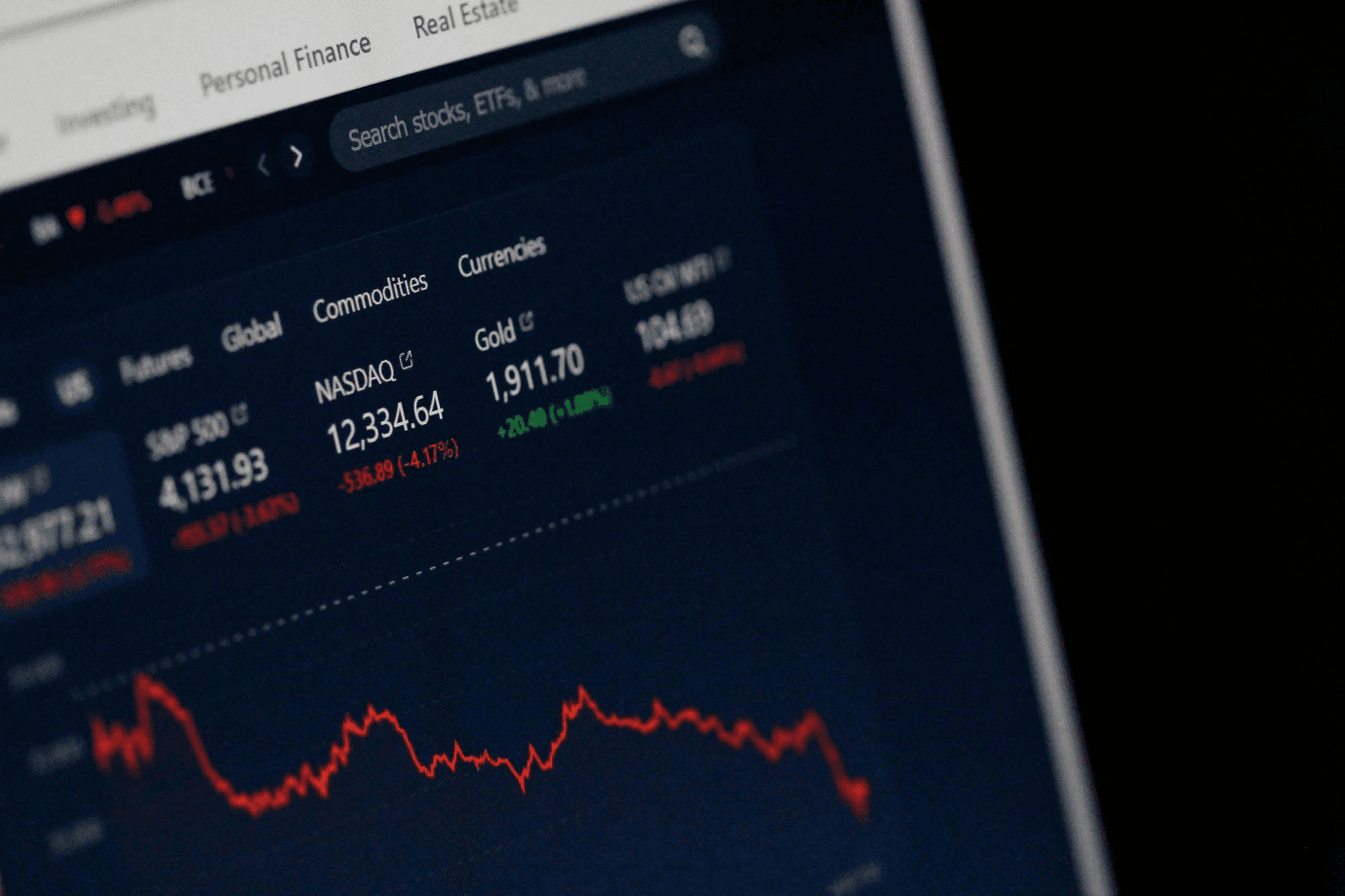
How systemic risk went from obscure theory to front-page news after 2008
While working on my research project, I have come to appreciate just how important it is to study systemic risk as it a hidden danger that doesn’t just shake the economy but breaks it. The closest analogy that I can think of to explain systemic risk is picture the financial system like a spider’s web. One touch to the web is enough to cause vibrations that can ripple everywhere. This ripple effect is systemic risk. In 2008 the collapse of a few firms was enough to erase $10 trillion dollars from the global economy.
Given the gravity of systemic risk, you would expect it to be widely researched by surprisingly prior to 2008, systemic risk was not a mainstream concept. While central bankers and economists had explored contagion and financial instability during the Asian financial crisis and the Saving Loan Crisis in the US, but research was mostly limited to descriptive stats and banks run models.
It was the GFC that steered more research into systemic risk. Since then, three main approaches have emerged to model and measure it:
- •Factor based correlation of assets to calculate default probabilities as in Kritzman et al. (2011) and Prato et al. (2013)
- •Use of Tail dependence (Zhou, 2010; Adrian & Brunnermeier, 2016; Acharya et al., 2017)
- •Use of Network Models to capture interconnectedness across institutions as in Hardle et al. (2016); Wang et al. (2017, 2018a, 2018b) and Demirer et al. (2018)
In simple terms, systemic risk is the danger that trouble in one institution or market segment can cascade through the entire system, putting the broader economy at risk. Unlike many risks, it cannot be easily diversified away which is why understanding its causes and impacts is vital if we hope to contain future crises before they spread.
The fall of Lehman brothers and the near collapse of AIG had exposed how interconnectedness of the global economy. Policy markers realised that they need more than just micro prudential policies to manage system wide risks. They need macro prudential policies. This is when major organisations like the Bank of International Settlements, International Monetary Fund, the Financial Stability Board and central banks around the world began investing in systemic risk.
The most influential paper that I have read on this topic is “Measuring Systemic Risk” by Viral Acharya and others in 2015 where the authors introduce innovative metrics that have now become an industry standard in measuring systemic risk
- •Conditional Value at Risk (CoVaR): this measure quantifies the amount a risk the entire system takes on when an institution is struggling.
- •SRisk: it is a forward-looking metric that estimates how much capital a firm would need to raise in a crisis to main its operations. Moreover, it highlights which firms are too big to fail based on their systemic importance.
The beauty of these metrics is that they go beyond the balance sheet and incorporates market data network effects to provide a holistic picture of systemic vulnerabilities.
My own research focuses on applying these systemic risk measures. For instance, the following graphs illustrates systemic risk exposure of HDFC Bank.


This makes me wonder: what if the next financial crisis doesn’t start where we expect it the most? That is the challenge of systemic risk. It hides in the connections, not just the headlines. Capital buffers can protect individual banks. But who is going to protect the network? That’s where systemic risk comes in and why it’s now the top priority for regulators worldwide.


