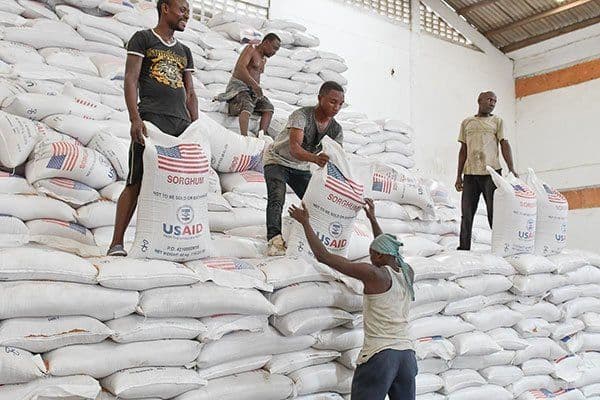
Do you wanna donate a dollar to hungry kids in Africa?
There is a well-known biological cautionary tale regarding the hatching of a chick: if an external observer intervenes to break the shell, aiming to spare the creature the struggle of emergence, the chick typically emerges too weak to survive. The struggle itself is the indispensable mechanism for developing the muscular strength required for life. This dynamic serves as a potent analogy for the structural failure of foreign aid in African development economics. For over half a century, the prevailing orthodoxy grounded in the Harrod-Domar and "two-gap" models posited that the binding constraint on African development was merely a capital deficit, a "shell" to be broken by massive external financing. However, despite an infusion of over $1 trillion intended to bridge savings and foreign exchange gaps, the anticipated economic convergence has not materialized. Instead, much like the intervention with the egg, the reliance on external capital to circumvent the arduous process of domestic resource mobilization may have inadvertently atrophied the very institutional muscles: fiscal capacity, democratic accountability, and administrative competence that are prerequisites for self sustaining economic transformation.

US Aid to nations around the world
The Failure of the "Big Push"
The prevailing development orthodoxy of the 1960s, grounded in the Harrod-Domar growth model and later the "two-gap" model, posited that capital scarcity was the binding constraint on African development. The theoretical solution was a massive infusion of foreign capital to bridge the savings and foreign exchange gaps, thereby catalyzing industrialization.
However, empirical data reveals a stark disconnect between aid volumes and economic performance. While Sub-Saharan Africa receives approximately 3% of its GNI(Gross National Income) in aid five times the share of the Middle East and North Africa, this influx has not translated into self-sustaining growth. Instead, the region has historically suffered from sluggish growth and persistent poverty, with per capita GDP often declining even as aid flows continued, particularly during the "lost decade" of the 1980s.
Macroeconomic Distortions
Large inflows of foreign currency via aid can induce an appreciation of the real exchange rate, rendering the recipient country's tradable sectors (manufacturing and agriculture) less competitive in global markets. This phenomenon, akin to the "Dutch Disease" observed in resource rich economies, can lead to deindustrialization. In Africa, the industrial sector’s share of GDP contracted from roughly 14% in 2000 to approximately 11% in 2022, suggesting that aid may have unintentionally inhibited the structural transformation required for long-term development.
The efficacy of aid is constrained by the recipient's absorptive capacity; the ability to utilize financial resources effectively. Constraints include a scarcity of skilled personnel, weak procurement systems, and administrative bottlenecks. Consequently, aid exhibits diminishing marginal returns; beyond a certain threshold, additional capital overwhelms local institutions, leading to cost overruns, delays, and waste.

The Political Economy of Aid Dependency
Perhaps the most critical failure of foreign aid lies in its impact on governance and institutional incentives. The "aid curse" hypothesis suggests that unearned income from donors has political consequences similar to the "resource curse."
Nobel laureate Angus Deaton argues that aid severs the social contract between government and the governed. In a functioning democracy, governments collect taxes and, in return, provide public goods, creating a feedback loop of accountability. However, when governments derive a significant portion of their revenue from foreign donors (historically up to 40-50% in heavily aid-dependent states), they become accountable to external agencies rather than their own citizens. This upward accountability shift erodes democratic development and weakens the incentive to build robust local institutions.
Furthermore, aid flows represent a lucrative source of rents. This incentivizes rent seeking behavior, where officials and elites compete for access to aid resources rather than engaging in productive enterprise. Studies have found no robust evidence that less corrupt governments receive more aid; in fact, aid flows often persist despite systemic corruption, inadvertently fueling patronage networks.
Modality-Specific Failures
Different categories of aid have distinct transmission mechanisms for failure:
- •Humanitarian Aid: While successful in immediate palliative care (e.g., famine relief), chronic humanitarian aid creates market distortions. For instance, the influx of free food aid can depress local agricultural prices, disincentivizing local production and deepening food insecurity cycles.
- •Budget Support: Direct transfers to treasuries rely heavily on the fiduciary integrity of the recipient. The 2013 "Cashgate" scandal in Malawi, where millions in public funds were embezzled, illustrates the high fungibility risk of budget support in weak governance environments.
- •Military Aid: Intended to promote stability, military aid has frequently backfired by strengthening authoritarian regimes and fueling arms races. In West Africa, the prevalence of coups led by foreign-trained officers suggests that security assistance can inadvertently embolden militaries to intervene in civilian politics.
Long-term aid has fostered a "dependency syndrome," characterized by a loss of policy agency. Governments may outsource development strategy to donors, leading to institutional atrophy. Additionally, the aid industry creates labor market distortions. High salaries offered by international NGOs and donor agencies attract the "best and brightest" talent away from the civil service and private sector, engaging in "capacity substitution" rather than capacity building.
Dambisa Moyo who wrote Dead Aid and Dependency, calls aid “the single worst decision of modern developmental politics”


Comparison with SE Asia:
The economic divergence between the "Asian Tigers" and Africa is not a result of aid volume, but of strategic utilization and the imposition of "hard budget constraints." Contrary to the bootstrapping myth, nations like South Korea and Taiwan were heavily subsidized by US aid, financing up to 90% of investment in Korea’s case, but this capital was treated as a temporary bridge rather than a permanent lifeline. The defining variable was the "velocity of exit"; for instance, the US threat to terminate aid to Taiwan in 1965 forced a pivot toward export-oriented industrialization. Unlike the African model, where aid often funds recurrent consumption and lacks a "sunset clause," the Asian model utilized these inflows exclusively for capital goods and infrastructure, such as the Seoul-Busan highway, effectively treating aid as venture capital to catalyze future independence.
This structural contrast is further exemplified by the modern "Trade-First" trajectory of Vietnam compared to aid-dependent African states. While Vietnam utilizes Official Development Assistance (ODA) merely as a foundation to attract Foreign Direct Investment (FDI): securing nearly $10 in private capital for every $1 of aid, many African nations see aid substitute for business, attracting less than $0.50 in investment per aid dollar. By enforcing export discipline and prioritizing global competitiveness over import substitution, successful regions have avoided the "Dutch Disease" and "learned helplessness" that plague systems reliant on open-ended support. Ultimately, the lesson is that development requires an aggressive strategy to replace aid with trade, rather than the indefinite sustenance of a welfare-based economy.
Selective Success:
Proponents of foreign aid argue that when external finance is paired with strong domestic policy, it yields significant developmental dividends, as evidenced by several "selective success stories." Ethiopia in the 2000s serves as a prominent case study; high per-capita aid facilitated the creation of massive social safety nets and infrastructure, coinciding with annual growth rates of 8-10%, although this progress was complicated by authoritarian governance. Similarly, Ghana utilized aid to expand health insurance and education while transitioning to middle-income status , though its success was also buoyed by commodity exports. Perhaps the most undeniable impact lies in the health sector, where aid-driven initiatives like PEPFAR and the Global Fund have saved tens of millions of lives by nearly eradicating diseases such as Guinea worm and river blindness, creating a human capital foundation that economists argue is a prerequisite for long-term economic potential.
Furthermore, scholars challenge the "dependency" narrative by pointing to instances where aid successfully built state capacity and allowed nations to "graduate" from assistance. For example, donor-funded technical assistance was crucial in helping Rwanda establish a functional revenue authority, which dramatically increased domestic tax collection. Historical precedents like Botswana and Cape Verde demonstrate that the "aid trap" is not inevitable; both nations utilized early aid to build tourism infrastructure or manage resource revenues before achieving self-sufficiency. These examples suggest that corruption and dependency can be mitigated when aid is routed through tightly audited channels or NGOs, when it is partnered with committed local leadership focused on an eventual exit strategy.

Conclusion:
While we acknowledge that foreign aid has achieved critical successes in humanitarian relief and specific human development metrics , we find that it ultimately failed its primary goal of being a catalyst for Africa's self-sustaining economic transformation. In our view, this failure stems from aid's structural tendency to create a dependency trap, undermining governance, fueling corruption, and substituting for the essential domestic policy efforts required for competitiveness. The necessary path forward, as we see it, requires a fundamental shift in approach: we must stop treating aid as a permanent lifeline and instead utilize it as a temporary, selective tool leveraged to build institutions, attract private investment, and facilitate the continent’s determined move toward trade-driven prosperity


