Buy Now, Pay Later: Convenience, Crisis, and Culture
That new pair of sneakers? The concert tickets you just had to have? Even your weekly takeaway? Welcome to the magical world of 'Buy Now, Pay Later' (BNPL), the checkout option that's taken the globe by storm.
Led by giants like Klarna, Afterpay, and Affirm, the promise is intoxicatingly simple: get all your goodies now and split the cost into a few breezy, interest-free chunks. It’s the retail therapy you want, with a payment plan that feels too good to be true.
But is it? Behind the slick apps and seamless one-click approvals, a different story is unfolding. Whispers of soaring defaults are getting louder, regulators are starting to raise their eyebrows, and our collective relationship with debt is getting a very modern, and very risky, makeover.
As of 2024, nearly 1 in 5 U.S. consumers has used BNPL, and adoption is especially high among Millennials and Gen Z.
Convenience: Why Consumers Love BNPL
BNPL offers:
- •Zero or low interest (at first): Unlike credit cards, most BNPL providers advertise “no interest if paid on time.”
- •Frictionless checkout: Just a few clicks, no lengthy approvals.
- •Small, digestible payments: $100 sneakers feel like $25 today.
This is why adoption has skyrocketed in e-commerce. According to a LendingTree survey, 46% of Americans have used BNPL at least once — many for purchases under $100.

The Joke (and the Warning): Paying for Food on EMIs
While BNPL makes sense for a big-ticket item like a laptop, its spread to everyday essentials reveals cracks in consumer financial health.
When shoppers are putting groceries, gas, or takeout meals on installment plans, it signals that wages and savings aren’t keeping up with inflation and lifestyle expectations.
In 2023, nearly 25% of BNPL users admitted to using it for basic necessities like food and utilities.
The Psychology: Why BNPL Hooks Us
BNPL thrives on cognitive biases:
- •Present Bias: We prefer benefits today, costs tomorrow.
- •Denial of Debt: Four small payments don’t feel like “debt.”
- •Social Validation: Seeing “Pay in 4” everywhere normalizes the behavior.
- •Digital Nudge: Seamless integration into checkout lowers friction compared to pulling out a credit card.
Think of BNPL as a behavioral trick: it shrinks the pain of paying. But when multiplied across multiple purchases, it creates a snowball effect.
BNPL vs. Credit Cards: Key Differences

While credit cards remain dominant, BNPL transactions in the U.S. hit $80 billion in 2023, up nearly 20% YoY.
Credit Cards vs. BNPL: A Psychological Divide
While credit cards and BNPL may seem similar, they shape consumer behavior differently:
Credit Cards:
- •Consumers often see them as a tool for emergencies or larger expenses.
- •Carrying a balance feels weighty due to monthly statements and visible interest rates.
- •Rewards programs (cashback, points) make spending feel like a transaction with some return.
BNPL:
- •Splits costs into smaller, seemingly harmless chunks, minimizing the perception of debt.
- •Defaults are less stigmatized because amounts are smaller, but they add up quickly.
- •No immediate monthly bill — instead, it’s dispersed into smaller reminders, which can feel less pressing but more frequent.
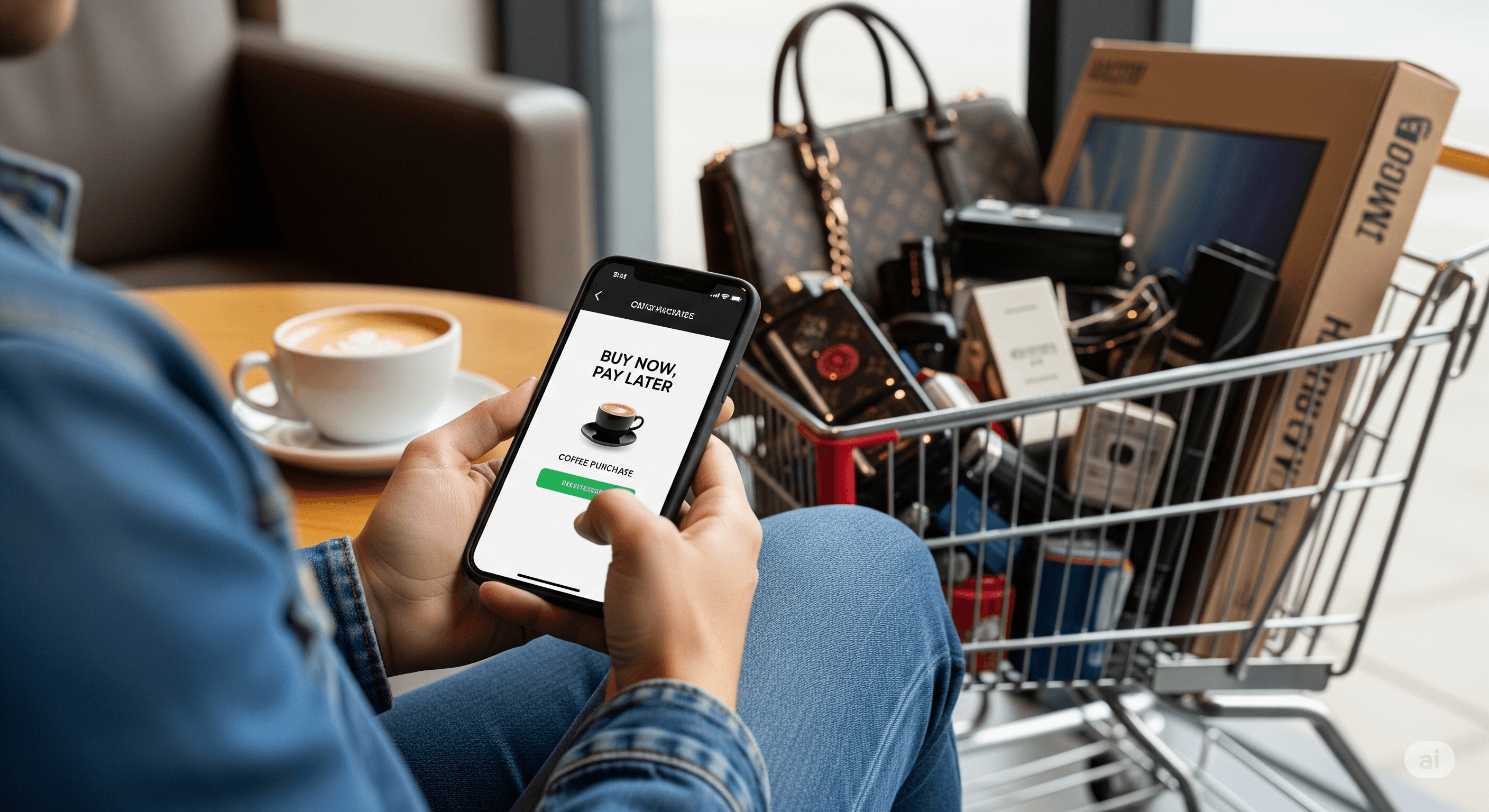
Psychologically, BNPL reduces the pain of paying more effectively than credit cards. That’s why people may feel comfortable financing coffee with BNPL but would hesitate to swipe a credit card for the same purchase.
CFPB data shows BNPL is disproportionately used for discretionary items (fashion, beauty, electronics) rather than essentials — but use for groceries and gas is growing, signaling financial strain. BNPL users in the U.S. skew younger, more racially diverse, and less financially secure than credit card users. Many consumers told the CFPB they see BNPL as a “money management tool” rather than credit — highlighting the psychological blind spot where users underestimate debt.
The Dark Side: Misuse and Non-Payments
BNPL defaults are rising. Companies like Klarna, Affirm, and Afterpay have all reported higher delinquency rates, especially among younger customers.
Why?
- •Stacking: Consumers juggle multiple BNPL loans across providers.
- •No central tracking: Unlike credit cards, missed BNPL payments aren’t always visible in credit reports.
Impulse spending: The “Pay in 4” button encourages discretionary purchases.
The Economic Ripple Effect
- •For Consumers: Easy credit fuels short-term spending, but long-term debt risk is mounting.
- •For Merchants: BNPL boosts conversion rates and basket sizes, but at higher transaction fees.
- •For Providers: Profitability is under strain due to defaults, regulatory scrutiny, and investor skepticism.
- •For the Economy: BNPL has become a “shadow credit system” — credit creation outside of traditional banking oversight.
Delinquency rates rising faster than credit cards: In late 2023, 18% of BNPL users missed a payment, compared to 8% of credit card users with late fees.The CFPB found many consumers juggling 3+ BNPL loans simultaneously, with no single lender or bureau tracking their total exposure.
Credit cards must disclose APR, fees, and repayment schedules under the Truth in Lending Act. BNPL disclosures vary widely — making comparisons harder for consumers. While most credit card activity is reported to bureaus, only a minority of BNPL lenders report timely repayments, but missed payments often do get reported — skewing credit outcomes negatively.
Klarna snapshot: Revenue growth, large U.S. footprint, but profitability choppy amid restructuring and higher loss provisions; credit losses remain manageable relative to GMV but still a key swing factor. Translation: operationally strong, financially sensitive to credit cycles.
Regulation: Washington Steps In
The U.S. government has begun treating BNPL more like traditional credit:
- •In 2022, the CFPB launched an inquiry into BNPL providers.
- •In 2023–24, regulators signaled plans to enforce disclosure, credit reporting, and consumer protection standards.
Concerns include data harvesting, debt accumulation, and lack of clear dispute resolution.
Cultural Reflection: What BNPL Says about our new habits
BNPL is more than finance — it’s a mirror:
- •Wages haven’t kept pace with costs.
- •Younger generations distrust traditional credit cards but still need liquidity.
- •Convenience often wins over caution.

BNPL isn’t inherently bad — when used responsibly, it can smooth cash flow and democratize access. But in the U.S., it has become a symptom of deeper economic realities: stagnant wages, rising costs, and a culture of instant gratification.
The real question: Are we financing convenience, or mortgaging the future?
Here Is a document by the Consumer Financial Protection Bureau (USA) on BNPL with interesting figures.


